United Kingdom
 Republic of Ireland
 Polska
 România
 Republica Moldova
 Magyarország
 Italia
 Bulgaria
 Deutschland
 Schweiz
 Österreich
 Lichtenstein
 Belgien
 Luxemburg
 Česko
Česko Slovenská republika.
 España
 Российская Федерация
 Украина
 Республика Беларусь
 Литва
Литва Латвия
 Эстония

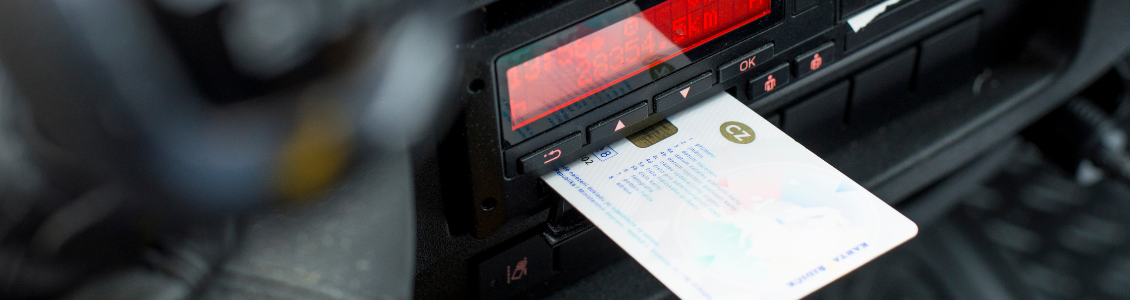
UPDATE: Starting 1 July 2026, vans with a Gross Vehicle Weight (GVW) between 2.5 and 3.5 tonnes engaged in international goods transport must also be equipped with second-generation smart tachographs (G2V2).
Second-generation smart tachographs are mandatory equipment for newly registered lorries with a GVW above 3.5 tonnes in the European Union, the United Kingdom, Switzerland and Norway.
In short, smart tachographs are a technologically advanced version of digital tachographs.
They are equipped with modern GNSS locators, which enable remote data reading by roadside inspection authorities without the need to stop the vehicle.
Thanks to satellite systems, the new tachographs automatically collect data on the location of the vehicle, which allows inspectors to detect violations more effectively.
Since August 2025, only vehicles with second-generation smart tachographs (G2V2) will be used in international transport.
What's new in smart tachographs?
Automatic recording of border crossings
One of the most important new features will be the automatic recording of border crossings within the European Union using GNSS positioning. The position of the vehicle will be stored in the tachograph's memory and can be retrieved by road inspectors.
Drivers will certainly appreciate not having to stop for checks, e.g. at ports, in order to efficiently board a ferry. Thanks to the new device, checks will be carried out remotely.
Most modern tachographs will have the option to set ferry/train mode or similar. If the ferry crossing is part of your daily rest period, set the tachograph to rest mode upon arrival at the port and after check-in.
Before boarding the ferry, select the ‘ferry’ option. This will record the reason for the interruption of your rest period.
When boarding the ferry, the tachograph will automatically switch to driving mode, so you must remember to set it back to rest mode.
Find out more about ferry mode on tachographs
Increased capacity
In addition, the memory will be increased, allowing for longer periods of driver activity to be monitored. New, higher-capacity driver cards will also be introduced.
Greater capabilities for remote monitoring
Using DSRC antennas, the new tachographs will increase the possibilities for remote control, which will include, among other things, the maximum driving time. The devices will also have a loading and unloading recording function (including location) and will be equipped with an ITS interface that will communicate with external transport systems via Bluetooth.
In addition, in the event of changes in regulations, it will be possible to install updates to the tachograph software.
What does this mean for transport operators?
Although these changes may cause some confusion, they should not be burdensome for transport operators themselves. The main challenge falls on truck manufacturers.
Tachographs must be updated at an authorised service centre by the end of March 2026.
Make sure you have subscribed to our mailing list to receive the latest industry news and updates.